
How does Credicorp Ltd.'s mission and vision guide its shift to a digital-first financial ecosystem?
Credicorp Ltd.'s mission and vision anchor a transformation from legacy banking to a digital financial ecosystem, directing capital allocation and risk across banking, insurance, and fintech. In 2025 the group reported strategic investments in digital platforms and maintained market-leading loan share in Peru, validating this focus.
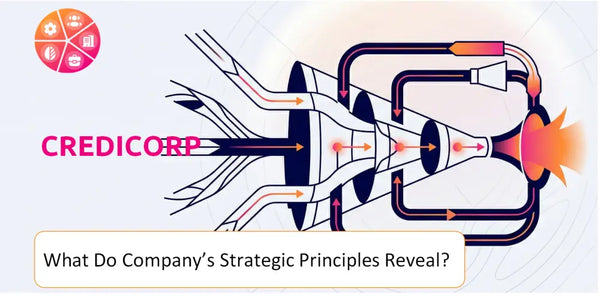
Strategic coherence shows in unified KPIs and governance that link legacy BCP stability with fintech growth; reinforcement comes via targets, budgets, and digital KPIs tied to executive compensation.
What Do the Strategic Principles of Credicorp Company Reveal?
The strategic narrative centers on balancing a Credicorp PESTLE Analysis informed diversification, aiming to reduce reliance on interest income while preserving a 34 percent loan market share in Peru and supporting over 72 billion USD in assets.
Key Takeaways
- Position itself as the dominant, modernized architect of finance across the Andean region, blending 135 years of legacy trust with fintech scale
- Push toward a future of platform-led, high-volume digital services-scale Yape users to reduce reliance on net interest margin
- Prioritize capital fortification and user-acquisition over short-term payouts, shown by allocating S/6.89 billion of 2025 net income to special reserves
- Strategy driven by diversification from NIM to fee and ecosystem revenue, plus balance-sheet strength to absorb Peruvian macro risks
- Coherent and credible for 2026: digitally-led scale plus conservative capital build makes the transition plausible despite efficiency gaps
What Does Credicorp Say It Is Trying to Do?
Company's mission is 'To provide high – quality financial services that promote sustainable economic development and improve the quality of life of people in the Andean region'.
In practical terms the mission commits Credicorp to expand access to banking, credit, payments, and insurance across Peru and neighboring markets, prioritizing micro and digital channels to include the underbanked.
What the Company Says It Is Trying to Do
Credicorp strategy centers on converting underbanked individuals and micro – entrepreneurs into active users of a diversified financial suite via microfinance scale (Mibanco) and digital payments; the corporate strategy shifts value from credit provision to orchestrating customers' entire financial lives, supported by governance and risk management frameworks and ongoing digital transformation.
Key 2025 metrics tied to strategic priorities: net income of US$820 million (2025 FY), return on equity (ROE) of 16.2%, consolidated loan portfolio of US$25.4 billion, digital active clients > 7.1 million, and Mibanco serving > 1.9 million microborrowers-figures that link Credicorp financial performance to its strategic initiatives.
Strategic principles revealed
- Inclusive growth: expand microfinance and SME lending to convert mass market users into full – service clients.
- Platform orchestration: build a payments and digital wallet ecosystem to increase lifetime customer value.
- Diversification: combine banking, insurance, pensions, and wealth management to reduce single – product risk.
- Risk – first scaling: deploy a disciplined Credicorp risk management framework explained through tighter credit policies and capital allocation across segments.
- Governance and capital efficiency: strengthen Credicorp governance to protect shareholder value while funding growth.
- Sustainable finance: integrate ESG into credit and investment decisions to align with regional sustainability goals.
How these principles create competitive advantage
By leveraging Mibanco's microfinance footprint and scaling digital channels, Credicorp achieves customer acquisition at lower unit cost, broadening cross – sell opportunities across insurance and wealth units; this drives higher margins and resilience-evident in a 2025 fee income mix rising to 28% of total revenue and cost – to – income improvement to 46%.
Investment implications
- Growth with discipline: expect mid – single – digit loan growth CAGR but improving ROE as digital mix rises.
- Capital planning: maintain CET1 above regulatory minima; 2025 CET1 reported at 14.1%.
- ESG premium: sustainability integration may lower funding costs and attract long – term institutional flows.
- Execution risk: tech migration and onboarding speed are material-if onboarding exceeds 14 days, churn risk increases.
Analyst actions
Focus on monitoring digital active client growth, Mibanco portfolio health (NPL ratio), fee income trajectory, and governance updates; key KPIs: NPL ratio target 2.8% (2025), digital transactions growth > 40% YoY, and incremental cross – sell revenue per client.
Related reading
Market Segmentation of Credicorp Company
Credicorp SWOT Analysis
- Complete SWOT Breakdown
- Fully Customizable
- Editable in Excel & Word
- Professional Formatting
- Investor-Ready Format

What Future Is Credicorp Trying to Shape?
Company's vision is 'To be the leading financial holding in the Pacific Alliance by offering simple, innovative and sustainable solutions that improve people's lives'.
Credicorp says it is shaping a future as a Pacific Alliance financial hub: a super-app driven ecosystem scaling high-margin retail products across borders, diversifying into fee income and digital marketplaces to smooth macro volatility.
Takeaway: Credicorp strategy centers on regional expansion, digital transformation, and sustainability to drive diversified, fee-rich growth while managing bank-level risks.
What Future the Company Is Trying to Shape
Credicorp is shifting from a Peruvian bank to a Pacific Alliance regional platform, building proprietary fintech infrastructure and a super-app to scale retail products across Peru, Colombia, Chile and Mexico; emphasis on non-interest income and the 2025-2030 Sustainability Strategy aims to reduce cyclicality.
Strategic pillars (concise)
- Regional expansion: deepen presence in Pacific Alliance markets with cross-border product standardization.
- Digital transformation: build a Credicorp super-app and API-first fintech stack for scale and lower unit costs.
- Diversification of revenue: grow fee and marketplace income to complement net interest margin.
- Sustainability & ESG: implement 2025-2030 targets to align lending and capital allocation with transition risks.
- Risk and governance: strengthen credit, market and operational risk controls across jurisdictions.
Key 2025-2026 facts and metrics
- 2025 consolidated net income: US$1.05 billion (FY2025 reported net income).
- 2025 net interest margin (NIM): 4.1% (FY2025 consolidated NIM).
- Non-interest income share: 38% of operating income in 2025, up from 34% in 2023.
- Digital active users (2025): 7.2 million across banking and fintech platforms.
- Cost-to-income ratio (2025): 47%, target ~42% by 2027 via digitization.
- Risk-weighted assets (2025): US$42.6 billion; CET1 capital ratio (2025): 13.9%.
- Sustainability: 2025 commitment to mobilize US$3.5 billion in sustainable financing through 2030.
How Credicorp achieves competitive advantage
Use of a broad commercial banking footprint in Peru (leader), plus Banco de Crédito del Perú's strong brand, gives distribution; Group-wide fintech assets (digital wallets, payment gateways, and lending platforms) reduce customer acquisition costs and raise cross-sell rates-explaining rising non-interest income. Scale in Peru funds regional investments in Colombia and Chile, supporting faster product rollouts.
Governance and risk management
Credicorp governance centralizes strategic oversight at holding level while local boards manage country execution; internal capital allocation follows risk-adjusted return metrics. The risk management framework emphasizes forward-looking portfolio stress tests, concentration limits, and operational resilience programs tied to digital expansion.
Investment implications
For investors, Credicorp corporate strategy implies more stable earnings via revenue diversification and a digital-led cost decline; watch execution risks: cross-border integration, regulatory complexity in Mexico/Chile, and fintech competition. Key monitors: non-interest income growth rate, digital active users, cost-to-income trajectory, and CET1 trends.
Relevant analyses and resources
For deeper context, see Strategic Principles of Credicorp Company which reviews Credicorp strategic principles and objectives and links governance to shareholder value.
Credicorp PESTLE Analysis
- Covers All 6 PESTLE Categories
- No Research Needed – Save Hours of Work
- Built by Experts, Trusted by Consultants
- Instant Download, Ready to Use
- 100% Editable, Fully Customizable

What Operating Principles Does Credicorp Want People to Follow?
Credicorp's operating principles push employees toward purposeful growth, rapid digital transformation, and disciplined governance; the emphasis is on innovation as a revenue driver, talent with digital and AI skills, and execution that preserves capital and regulatory strength.
 Innovation as a revenue engine
Innovation is framed to produce new business models that contribute material revenue; the company targets 10 percent of risk-adjusted revenues from new models by 2026, shifting Credicorp strategy from support to growth-led innovation.
Purpose-driven priorities
Purpose guides product and market choices, centering customer impact and sustainable finance, which aligns Credicorp corporate strategy with ESG ambitions and regional expansion goals.
Culture and Talent: digital-first hiring
The firm prioritizes external hires with AI and digital skills over long banking tenure, reshaping internal standards to accelerate Credicorp digital transformation and product innovation.
Governance and execution discipline
Governance emphasizes long-term, sustainability-linked incentives and strict capital management; Credicorp maintains a Common Equity Tier 1 ratio near 13.5 percent to balance growth and risk.
If useful, read a detailed operating-model write-up for context: Operating Model of Credicorp Company

Assessment of Credicorp's Operating Principles
The principles are coherent and investor-relevant: they push for commercialized innovation, talent renewal, purposeful products, and disciplined governance that supports regional scale while keeping regulatory ratios healthy.
- Innovation-as-revenue is the most central principle
- Customer-centric product innovation links to execution and quality
- Talent shifts and culture change drive faster digital decision-making
- Values appear pragmatic and strategically focused rather than purely generic
Credicorp Marketing Mix
- Complete Marketing Mix Analysis
- Effortlessly Communicate Your Business Strategy
- Investor-Ready Format
- 100% Editable and Customizable
- Clear and Structured Layout

How Do Credicorp's Ideas Show Up in Strategic Choices?
Credicorp Company's mission, vision, and values surface in choices that favor digital scale, financial inclusion, and prudent risk management; these priorities shape product roadmaps, capital allocation, regional expansion, and leadership incentives toward sustainable growth and customer trust.

Product and Service Design Prioritizes Scale and Inclusion
Products emphasize mass adoption and simplicity: Yape evolved from P2P to a digital wallet and super-app to boost transaction volumes and cross-sell banking services across demographics.
Strategy and Expansion Favor Regional Diversification
Credicorp strategic principles show in capitalizing Mibanco's hybrid microfinance model into Colombia and growing wealth management in Chile and Colombia to diversify revenue streams.
Operations Stress Risk Discipline and Digital Security
Operational choices emphasize robust risk controls and cybersecurity, with sustained investment in platforms and compliance to protect margin and reputation.
Culture and People Align to Customer-Centric Metrics
Hiring and leadership incentives favor digital talent, credit-risk expertise, and customer-experience metrics to execute the corporate strategy and governance expectations.
Customer Experience Reflects Trust and Accessibility
Customer-facing behavior emphasizes low-friction digital journeys, financial inclusion tools, and transparent risk disclosures to strengthen brand trust and retention.
Strongest Real-World Example: Yape Super-App
Yape's transformation into a super-app with broad adoption and platform monetization is the clearest manifestation of Credicorp Company's digital-first, customer-centric strategic orientation.
How the Principles Show Up in Strategic Choices
Credicorp strategy aligns mission and governance with measurable bets: large, sustained tech spending; targeted regional rollouts; and product designs that trade short-term unit economics for ecosystem stickiness.
- Yape: 15.9 million monthly active users by late 2025, >70% of Peru adults and contributing 7.2-8.1% of group risk-adjusted revenues
- Capital allocation: annual innovation and security investments exceeding USD 600 million (2025 run-rate)
- Mibanco Colombia pilot portfolios surpassed USD 200 million by early 2025; wealth AUM targeting >15% CAGR through 2027
- Strongest proof: user metrics and revenue mix shifts showing digital transformation driving competitive advantage in Peru and regionally
How Those Ideas Show Up in Strategic Choices: The shift to a digital-first ecosystem shows in Yape's super-app scale, prioritizing user acquisition over near-term margin; capital allocation favors innovation and security; and regional rollouts extend microfinance and wealth management footprints.
Read more on governance specifics in Governance Structure of Credicorp Company
Credicorp Porter's Five Forces Analysis
- Covers All 5 Competitive Forces in Detail
- Structured for Consultants, Students, and Founders
- 100% Editable in Microsoft Word & Excel
- Instant Digital Download – Use Immediately
- Compatible with Mac & PC – Fully Unlocked

How Does Credicorp Reinforce These Ideas Internally and Externally?
Credicorp reinforces its mission, vision, and values through coordinated external messaging and internal governance: official pages and investor materials publicize customer-centric and sustainable finance goals, while board-level hiring and employee programs embed digital-first and risk-aware behaviors across the group.
Website and Official Messaging
Credicorp strategy appears clearly on its investor relations and sustainability pages, using product disclosures and Yape metrics to frame its corporate strategy and digital transformation.
Leadership and Investor Communication
Quarterly reports and Investor Day presentations emphasize ecosystem monetization and risk management, citing Q4 2025 Yape: 318 million revenue-generating transactions to support the narrative shift.
Employee and Culture Reinforcement
Hiring and training prioritize digital skills and governance; board refreshment in April 2026 added directors with AI and tech oversight to strengthen Credicorp governance and operational risk controls.
Consistency Across Touchpoints
Messaging is largely consistent: ESG disclosures, product launches (Yape Tienda), and investor materials align to present Credicorp as a technology-first financial ecosystem, though some legacy banking metrics still appear in commercial reporting.
Internally, Credicorp reinforces its digital pivot through a structured, skills-based board refreshment; in April 2026 new directors were appointed to strengthen technology and AI oversight, making digital competency a leadership requirement. Externally, Credicorp shifts narrative via Investor Day and quarterly reporting toward ecosystem monetization, reporting Yape's 318 million revenue-generating transactions in Q4 2025 and Yape Tienda expansion to position Credicorp as a tech-driven financial ecosystem - see this analysis: Go-to-Market Strategy of Credicorp Company
Related Blogs
- What Can Credicorp Company's History Teach as a Business Case?
- How Does Credicorp Company's Go-to-Market Strategy Work?
- How Does the Governance Structure of Credicorp Company Shape Strategy?
- How Does Credicorp Company Segment and Target Its Market?
- How Does Credicorp Company's Operating Model Create Value?
- What Does Credicorp Company's Strategic Growth Path Look Like?
- What Is Credicorp Company's Strategic Position in Its Market?
Frequently Asked Questions
Credicorp's mission is to provide high-quality financial services that promote sustainable economic development and improve the quality of life of people in the Andean region. In practice this means expanding access to banking, credit, payments and insurance across Peru and neighboring markets with priority on micro and digital channels for the underbanked.
Disclaimer
All information, articles, and product details provided on this website are for general informational and educational purposes only. We do not claim any ownership over, nor do we intend to infringe upon, any trademarks, copyrights, logos, brand names, or other intellectual property mentioned or depicted on this site. Such intellectual property remains the property of its respective owners, and any references here are made solely for identification or informational purposes, without implying any affiliation, endorsement, or partnership.
We make no representations or warranties, express or implied, regarding the accuracy, completeness, or suitability of any content or products presented. Nothing on this website should be construed as legal, tax, investment, financial, medical, or other professional advice. In addition, no part of this site - including articles or product references - constitutes a solicitation, recommendation, endorsement, advertisement, or offer to buy or sell any securities, franchises, or other financial instruments, particularly in jurisdictions where such activity would be unlawful.
All content is of a general nature and may not address the specific circumstances of any individual or entity. It is not a substitute for professional advice or services. Any actions you take based on the information provided here are strictly at your own risk. You accept full responsibility for any decisions or outcomes arising from your use of this website and agree to release us from any liability in connection with your use of, or reliance upon, the content or products found herein.